Hyperbaric Oxygen Therapy
What Is Hyperbaric Oxygen Therapy?
Hyperbaric oxygen therapy (HBOT) is a medical approach that uses oxygen in a pressurized environment above 1 atmosphere absolute (ATA). The increased pressure allows oxygen to dissolve into and saturate plasma without relying only on hemoglobin or red blood cells, producing broad positive physiological, biochemical, and cellular effects.
This non-invasive therapy is one of the most trusted ways to effectively raise oxygen levels throughout the body's organs. A typical session lasts 60-90 minutes; users simply lie inside the chamber and breathe normally. As an adjunctive therapy, HBOT can complement and enhance the body's natural healing process in both chronic and acute conditions.
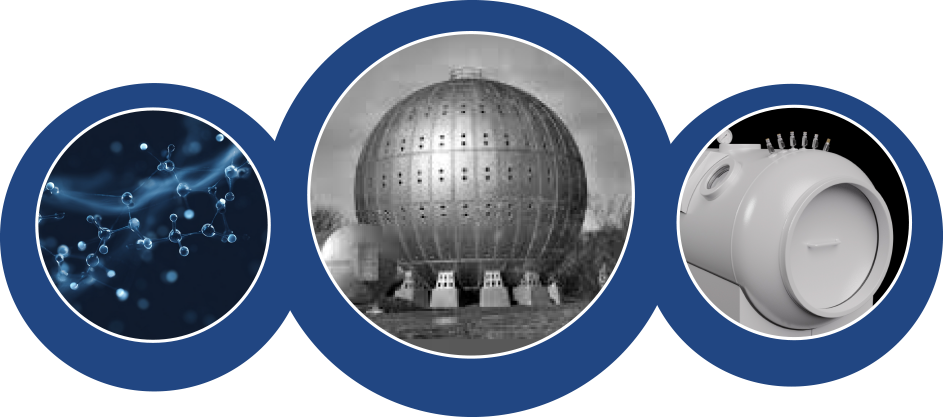
The principle can be understood through soda water: when you buy a bottle of soda, the CO? bubbles are under pressure. Pressure reduces the bubble volume enough for them to dissolve in the liquid, so they are not visible. When the cap is opened and pressure is released, the bubbles expand and become visible.
The same principle applies in a hyperbaric oxygen environment. Oxygen molecules become smaller under pressure and can dissolve into plasma. This exponentially increases oxygen delivery, allowing oxygen to reach deep areas of inflamed tissue and support optimal cellular and organ function.
Without Hyperbaric Oxygen
With Hyperbaric Oxygen
Gas Laws in Hyperbaric Oxygen Therapy
Henry's Law
Pressure is necessary for oxygen to dissolve effectively into plasma. In a hyperbaric oxygen environment, higher oxygen levels can penetrate deep tissues. Henry's Law explains why inhaling pure oxygen alone has limited effect: it must be combined with pressure to truly dissolve large amounts of oxygen into the blood.

Boyle's Law
As pressure increases, oxygen molecule volume decreases, creating a higher-density oxygen environment. Oxygen molecules in the alveolar membrane become more concentrated, and diffusion transfers more oxygen molecules into the blood, allowing plasma to reach a higher oxygen saturation level. Boyle's Law is also a foundational principle of hyperbaric and undersea medicine.
Charles's Law
Inside a hyperbaric oxygen chamber, temperature rises slightly as pressure increases. Higher temperature directly affects gas volume, increasing the total amount of available oxygen. This law explains why users may feel a mild temperature change during chamber pressurization and how that change can further optimize oxygen therapy effects.
The Development History of Hyperbaric Oxygen Therapy
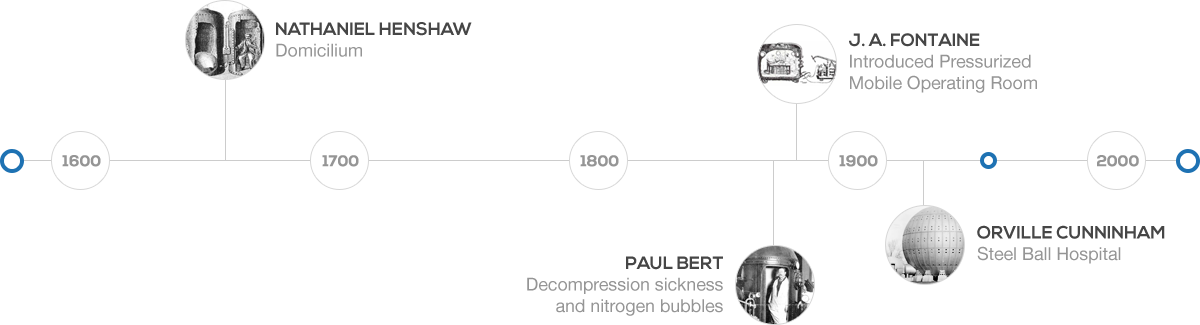
The history of hyperbaric oxygen therapy can be traced back to 1662. British clergyman Henshaw built the first known pressurized device, the "Domicilium," to treat a variety of illnesses. In 1878, French physiologist Paul Bert discovered the connection between decompression sickness and nitrogen bubbles, confirming that symptoms could be relieved through recompression.
In 1879, French surgeon Fontaine built the first pressurized mobile operating room. He found that anesthetic gases were more potent under pressure and that patients' oxygenation improved significantly.
In the early 20th century, Dr. Cunningham observed that heart-disease patients recovered better near sea level than at high altitude. In 1928, he built the famous "Steel Ball Hospital" beside Lake Erie: a six-story spherical building 20 meters in diameter that could reach 3 atmospheres. Unfortunately, the hospital was dismantled in 1942 for economic reasons.
Later, in the 1940s, the military developed hyperbaric oxygen chambers to treat divers with decompression sickness. In the 1950s, HBOT was first used in cardiopulmonary surgery, and in the 1960s it was used to treat carbon monoxide poisoning. To date, more than 10,000 HBOT clinical trials and case studies have been completed worldwide, with the vast majority reporting significant therapeutic effects.
Core Benefits of HBOT
Cellular Repair and Regeneration
Promotes stem-cell mobilization and accelerates damaged tissue repair and regeneration
Reduced Inflammation
Regulates inflammatory mediator expression and effectively suppresses chronic inflammation
Improved Brain Function
Enhances cerebral perfusion and improves memory and cognitive ability
Longevity and Anti-Aging
Telomere lengthening of up to 38% and clearance of senescent cells