Healthy Ageing
Have you heard of "super-agers"?
For most of human history, age-related disease has been viewed as an unavoidable part of growing older. People aged, became ill, and eventually passed away. For a long time, that was the common understanding of the ageing process.
Whether cancer, diabetes, heart disease, or cognitive decline, billions of dollars are invested worldwide every year to delay or even reverse age-related diseases. The ultimate goal of all these efforts is to help people live longer and, more importantly, live healthier lives, especially in their later years.
Lifespan and Healthspan
People often talk about lifespan as if it were the most important measure of life quality. In reality, healthspan matters more than lifespan.
Healthspan refers to the period of life spent in good health, free from age-related chronic disease. What if there were a way to delay natural ageing by fundamentally influencing the ageing process itself, rather than focusing only on individual diseases?
Is it possible to become a "super-ager"? Ageing researchers and scholars often recommend daily habits that are essential for healthy ageing, including balanced nutrition, good sleep habits, regular exercise, and advanced therapies now available to extend healthspan. Research shows that hyperbaric oxygen therapy is helping more people live fuller, healthier lives.
Meet the "super-agers" �� long-lived people who remain healthy, energetic, and free from debilitating disease in later life
Among us are remarkable individuals known as "super-agers." These people not only live far beyond the average lifespan, but also maintain a high quality of life throughout later years without being burdened by chronic or acute illness. Some super-agers even live to 100 or beyond, with brains and bodies that remain largely intact and functional.
Notably, statistical studies show that people over 95 tend to develop major diseases such as cancer and/or heart disease about 24 years later than the general population.

Who Are the Super-Agers?
China
China is one of the world's most populous countries and one of the fastest-growing countries for centenarians. Statistics show that China currently has more than 100,000 centenarians. Regions such as Bama in Guangxi, Hainan, and Hotan in Xinjiang are considered "longevity towns" in China, where average life expectancy is significantly higher than the national average. These longevity regions share common characteristics, including clean air and water, plant-forward diets, regular physical activity, and close community bonds.
Japan
Japan is globally known for longevity, with its centenarian population exceeding 86,000 and reaching a historic high. Okinawa is known as the "Island of Longevity," with nearly twice the national average number of centenarians per 100,000 people. Women account for 88.4% of Okinawan centenarians.
Singapore
According to a joint report by Singapore's Ministry of Health and the Institute for Health Metrics and Evaluation, Singaporeans are among the longest-living populations in the world, with average life expectancy reaching 84.8 years, a figure experts expect to keep rising. However, the same report reveals an important concern: although Singaporeans are living longer, the time spent in poor health is also increasing �� up to 10.6 years. Today, the focus is no longer only on extending lifespan, but on improving quality of life in later years.
How Can You Become a Super-Ager?
Diet and Exercise
Long-lived populations around the world share striking similarities in diet: mostly plant-based foods and moderate caloric intake. Centenarians in Okinawa, Japan, eat abundant vegetables, fruits, and legumes such as soybeans, using sweet potatoes rather than refined grains as their main carbohydrate source. Sweet potatoes have a low glycemic load and are rich in beneficial plant compounds such as flavonoids. They also practice the dietary philosophy of "hara hachi bu" �� stopping when they are about 80% full.
Staying physically active is another key factor. Moderate, regular exercise helps balance calorie intake and expenditure, supporting healthy weight and sustained physical capacity.
A Low-Stress Lifestyle
When researchers study long-lived populations, they find that centenarians generally have optimistic attitudes and unhurried lifestyles. For them, enjoying the present and maintaining inner calm matter more than racing against time.
Scientists have also identified a stress-resilience gene, FOXO3A, that is closely associated with human longevity. People carrying this gene may be two to three times more likely to live to 100. The gene helps protect the body from disease and various physiological stresses. Its higher prevalence among long-lived populations, combined with their naturally optimistic and calm lifestyles, helps them live healthier, more carefree lives.
Close Community Bonds
Residents of longevity regions often have large families and strong social-support networks. Their communities are closely connected, with neighbors caring for one another. In Okinawa, residents gather regularly in social groups known as "moai" to support each other and spend time together.
Research shows that people with more frequent social contact tend to be happier and healthier. Close community relationships not only improve mental health, but also indirectly reduce healthcare costs. This finding further confirms the profound impact of social connection on healthy longevity.
Hyperbaric Oxygen Therapy
Today, telomere shortening is regarded by researchers as a core issue in the biology of ageing. Telomere length is an important marker of biological aging. At the end of every chromosome in our bodies is a repeating DNA sequence called a telomere. Each time a cell divides, the telomere becomes slightly shorter. When telomeres shorten to a certain point, cells can no longer divide normally and eventually become senescent and die.
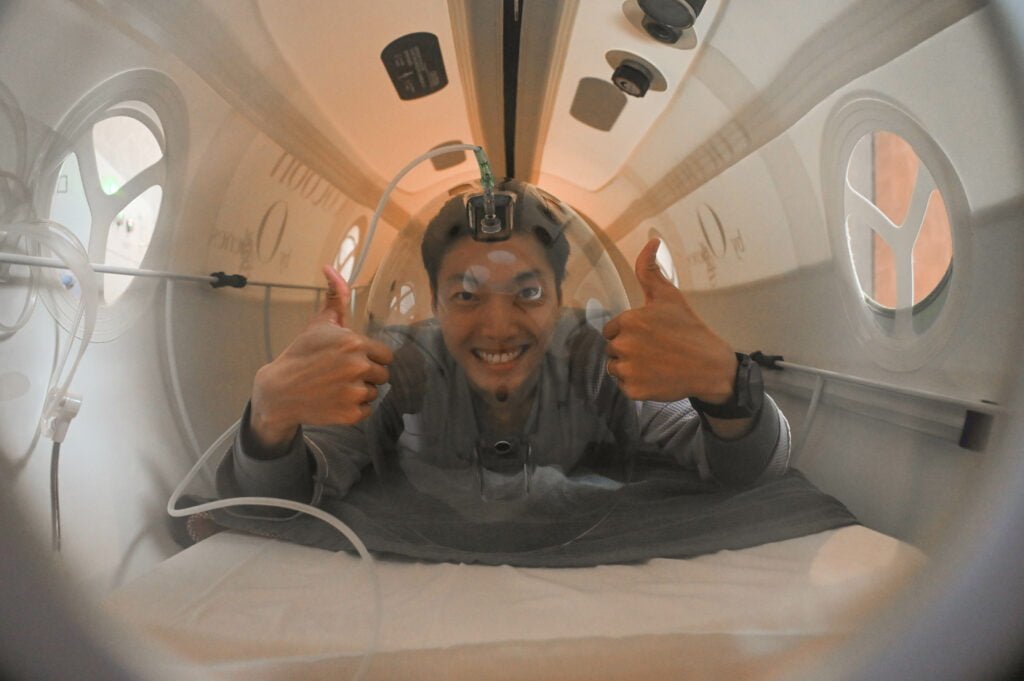
Research on hyperbaric oxygen therapy (HBOT) has brought a breakthrough to this field. Clinical studies have confirmed that a systematic HBOT protocol can lengthen telomeres, demonstrating that the ageing process can actually be reversed at a fundamental cellular and molecular level. Hyperbaric oxygen chambers can help lengthen telomeres by up to 38%, far exceeding any currently known lifestyle intervention.
In addition, hyperbaric oxygen therapy can reduce senescent cells in the body by 11-37%, effectively promoting the regeneration of new cells. This means HBOT may not only delay ageing, but also reverse the ageing process to some extent.
Conclusion
The factors that influence lifespan and health are multifaceted. Today, we pursue high-quality longevity �� staying healthy and happy remains the top priority for super-agers and is key to ageing gracefully and healthily. With balanced nutrition, regular exercise, a low-stress lifestyle, close social connections, and advanced wellness tools such as hyperbaric oxygen therapy, everyone has the potential to move toward becoming a "super-ager."
References
Want to live longer and healthier? Six secrets from Japan's older adults:
https://www.weforum.org/agenda/2021/09/japan-okinawa-secret-to-longevity-good-health/
Living well in later life: Learning from inspiring super-agers:
https://www.prudential.com.sg/priority-programme/opus/articles/learning-from-inspiring-super-agers
Reaching 100: Number of centenarians in Singapore doubled in 10 years:
https://www.straitstimes.com/singapore/reaching-100-number-of-centenarians-here-has-doubled-in-10-years