
Assessment tools used in the sleep study included:
These three data sources provided comprehensive information about participants' sleep quality, mood, and daytime sleepiness. They enabled a scientific comparison before and after HBOT treatment and clearly demonstrated significant improvement.
Consistent HBOT use significantly improved participants' sleep quality. These data were used to create personalized protocols that further enhanced sleep. Participants' sleep diaries also helped improve sleep habits and adjust lifestyle routines.
At least 7 hours of sleep per night is recommended. However, we should focus more on sleep quality, not just sleep duration.
Sleep quality is essential to our health. The main stages of sleep include:
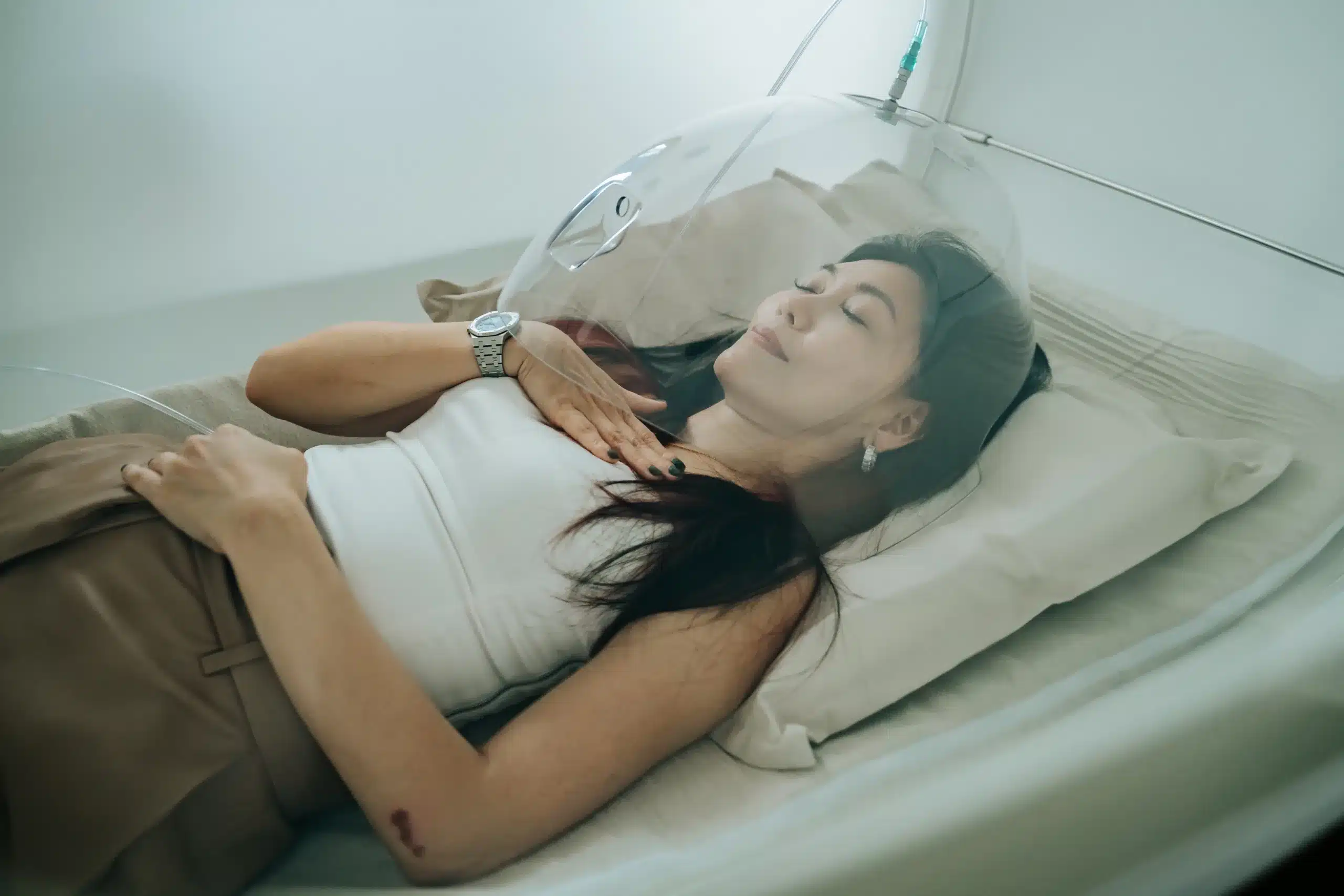
Hyperbaric oxygen therapy (HBOT) immerses patients in high-concentration oxygen, increasing the blood's oxygen-carrying capacity. Oxygen level and pressure inside the chamber are 40%-50% higher than at sea level. In a pressurized oxygen-rich environment, our tissues are filled with high oxygen levels, helping us enjoy benefits such as:
According to neuroscience research, exposure to high oxygen concentrations encourages the brain to maintain deep, restorative slow-wave sleep.
Deep sleep helps the brain and body recover and supports memory consolidation.
By contrast, when we are exposed to less oxygen, the brain tends to remain in rapid eye movement (REM) sleep.
Hyperbaric oxygen therapy can be used to enhance deep sleep and help people prone to insomnia obtain enough restorative slow-wave sleep.
Slow-wave sleep is essential for health because the body needs this deep sleep stage to feel fully rested. During sleep, blood oxygen may drop due to reduced breathing. If oxygen intake is insufficient, slow-wave sleep can be adversely affected.
With HBOT, the blood can become fully saturated with oxygen, helping improve sleep quality.
The sleep cycle is divided into:
People with poor sleep may experience the following issues:
Beyond oxygen deficiency, other factors in daily life can also affect sleep quality.
With the help of a hyperbaric oxygen chamber, we should also recognize that other aspects of daily life influence how well we sleep.
If you have been struggling with poor sleep quality, contact us to learn how HBOT may help ease your sleep problems.
Contact us to learn how ZTCLOUDOXY hyperbaric oxygen chambers can help you achieve better deep sleep.
Brandon E. Hauer et al., Hyperoxia Enhances Slow-Wave Forebrain States Under Anesthesia and Natural Sleep. Journal of Neurophysiology.
Vanita Mehta et al., Obstructive Sleep Apnea and Oxygen Therapy: A Systematic Review and Meta-Analysis. Journal of Clinical Sleep Medicine.
Raymond Quock et al., Hyperbaric Oxygen Therapy Can Improve Sleep, 2020. Washington State University.
James M. Walker et al., Sleep Assessment of a Randomized Trial of Hyperbaric Oxygen in Service Members with Mild Post-Concussion Brain Injury. Sleep Medicine.
Renata L. Riha, Oxygen Therapy for Obstructive Sleep Apnea-Hypopnea Syndrome. Respiration, March 2019.
Solan, Matthew, and Howard E. LeWine. "How Much Sleep Do You Actually Need?" Harvard Health, October 2023.
"The Difference Between Deep Sleep and REM Sleep." Chase Dental Sleepcare.
"Stages of Sleep: What Happens in a Sleep Cycle." Sleep Foundation, December 2023.